
"Bad investments can burn down without erasing real capability gains." This distinction matters because AI's potential remains intact even if market valuations falter. While AI spending and valuations are inflated, a market correction would impact prices before disproving the technology's utility. A bubble pop would highlight mispricing, not invalidate AI's usefulness.
Verdict: AI's utility remains even if a market bubble pops.
AI critics are right about excess, wrong about collapse
$700 billion versus less than $100 billion is the right place to start: a bubble is when money and prices run ahead of what a business can earn today, and hyperscalers have budgeted roughly that much capital expenditure this year against that revenue base, according to Substack.
Claim: AI spending and valuations are inflated, and a market bubble can deflate without proving the technology empty.
Counterargument: The skeptics’ best case is strong: current annual revenue attributable to AI is estimated at just $15 billion to $20 billion, while expected spending keeps climbing, so the boom looks like classic overinvestment rather than durable demand.
Rebuttal: That mismatch shows bad pricing discipline, not useless tools. If you run this in production, the practical question is whether a system saves labor or lifts output at your margin; a repricing hits investors first, while useful systems keep getting deployed.
AI spending and revenue are badly out of proportion
On June, according to substack.com, OpenAI showed a $20.9 billion operating loss. That means the core business spent far more than it brought in, even before you get to whether the spending will pay back soon.
The mismatch is bigger at the market level. Capital expenditure means money spent on long-lived assets such as data centers and chips, and hyperscalers have budgeted roughly $700 billion against less than $100 billion of total AI revenue. A valuation is the price investors assign to a company, and OpenAI is valued at roughly $850 billion while also reporting that loss profile.
| Signal | Figure | What it says |
| Hyperscaler AI capex vs AI revenue | roughly $700 billion vs less than $100 billion | Spend is far ahead of current sales |
| OpenAI valuation | roughly $850 billion | Price assumes very large future payoff |
| OpenAI audited results | $20.9 billion loss on $13.07 billion revenue | Growth has not turned into operating profit |
If you run budgets or buy these stocks, watch the ratio between infrastructure spend and booked revenue before you watch demos. Total current annual revenues attributable to AI are estimated at just $15 billion to $20 billion.
A pop would hit prices before it disproved the tools
July 2025 gave us the cleanest example: Nvidia hit a $5 trillion market capitalization, according to techpolicy.press. A repricing is the market changing what it will pay for expected future profits, and that can happen fast when expectations outrun results.
Bad investments can burn down without erasing real capability gains.
That matters because spending can stay irrational while tools keep getting better. Techpolicy.press reported global AI spending is estimated at $375 billion in 2025 and $500 billion in 2026.
If you run this in production, watch your unit economics, not the stock chart. The market can punish overbuilt data centers or inflated multiples while the underlying systems still save labor, ship features, and keep improving.
The best case for the haters is stronger than fans admit
June 2025 is enough to make the haters’ case sound serious. According to Fortune, the U.S. Census Bureau’s biweekly survey of 1.2 million businesses showed the six-week average for larger companies using AI fell from 13.5% to 12%, while only microbusinesses kept a steady upward trend.
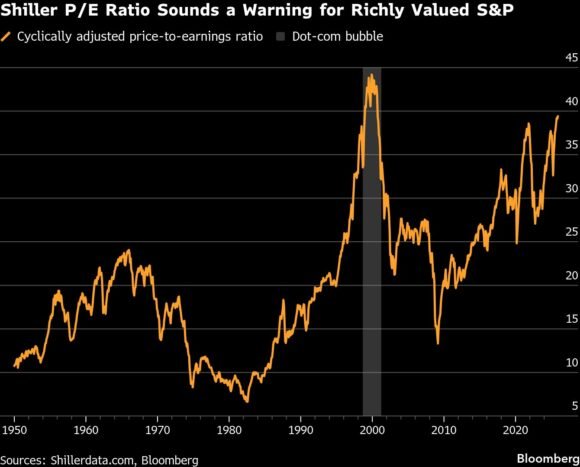
That matters because stalled use, failed trials, and narrow market leadership are exactly how bubbles look before sentiment turns.
A pilot project is a small test before wider rollout, and return on investment means whether the gains outweigh the cost. Skeptics have a real point: if 95% of AI pilot projects fail to deliver a return on investment, the problem is not taste or fear, it is weak business fit.
| Signal | What skeptics can fairly say |
| Larger-company usage dipped | Adoption is not a one-way climb |
| Most pilots miss ROI | Experiments are not turning into durable value |
| Index concentration is high | Market gains can mask narrow leadership |
Index concentration means a small number of stocks drive a large share of an index. If you run this in production, watch for the handoff from demo to workflow, and watch whether broad usage rises without a handful of stocks carrying the story.
Even then, a bubble burst would not settle the argument
95% of AI pilot projects fail to deliver a return on investment, according to Fortune’s report on an MIT survey. That is the steelman: weak adoption, failed pilots, and overheated stocks look like proof the whole thing is hollow. It still does not hold, because pilots usually fail at the boundary between a capable model and a bad business fit.
A failed pilot says more about deployment than about usefulness.
**Why it matters:** If you run this in production, judge systems on a narrow workflow with a clear owner. Do not treat a bad pilot as a verdict on every use case.
The pattern is uneven, not empty. Fortune reported that only microbusinesses, with fewer than four employees, continue to show a steady upward adoption trend. That is what you expect when tools land first where buying cycles are short and process change is local.
April 2026 matters here: Anthropic’s run rate reached $30 billion by then after being about $9 billion at the end of 2025. Watch where repeat spend survives after repricing.
What a real AI washout would and would not prove
OpenAI is valued at roughly $850 billion, and that is exactly why I separate price, firms, and capability before I call any washout decisive. According to techpolicy.press, the promise of AGI, meaning a system that can handle most intellectual tasks people can, is what many AI business models lean on.
If markets crack, start by asking what actually failed.
| Outcome | What it would actually mean |
| Stock declines | Expectations and discount rates reset faster than profits arrive |
| Company failures | Specific business models, financing plans, or product timing broke |
| Durable technical progress | The tools keep improving and remain useful even through repricing |
A hyperscaler is a giant cloud provider that can fund huge compute buildouts from a broad base of existing business. If smaller vendors fold while hyperscalers keep shipping and customers keep buying, that proves capital structure mattered, not that the systems were fake.
Anthropic's run rate was about $9 billion at the end of 2025 and reached $30 billion by April 2026. Watch whether usage and model quality keep moving after any selloff.
A bubble can pop and AI can still be real
$700 billion against less than $100 billion answers it: yes, an AI bubble can pop and the tech still be real, because market prices are claims on future profit while deployed systems are judged by present work done. The answer flips only if, after a repricing, usage falls, repeat spend dries up, and model quality stops earning its keep in narrow workflows; if you run this in production, that is the line to watch, not whether a favorite stock gets cut in half. A washout would prove that capital was mispriced, some firms were built on bad assumptions, and hype outran revenue. It would not prove the tools were fake unless customers stop paying once the story gets cheaper.
Sources
- 1. [A practical guide to the looming(?) AI bubble]( https://alexkotran.substack.com/p/a-practical-guide-on-the-looming)