
Claude Code wins large refactors when success depends on repository inventory and command-based verification. Cursor is the better choice when correctness depends on line-level product judgment in a bounded component, service, or failing test. Choose Claude Code for dependency migrations and monorepo-wide renames that cross packages, imports, manifests, and compatibility call sites. Choose Cursor for UI component refactors and one-service bug fixes.
Verdict: Claude Code is the winner for large refactors; Cursor wins bounded edits requiring line-level product judgment.
The refactor checks that decide this choice
Large-refactor fit is decided by whether the agent can inspect the repository, make coordinated edits, run project checks, and leave an auditable patch. Claude Code is a terminal-first coding assistant. Cursor is a Visual Studio Code-based AI editor, so its primary control surface is the editor.
flowchart LR
  A[Inventory] --> B[Plan] --> C[Edit] --> D[Test] --> E[Diff review] --> F[Commit]
Can the tool prove a repository-wide change still holds after edits?
| Criterion | Claude Code | Cursor |
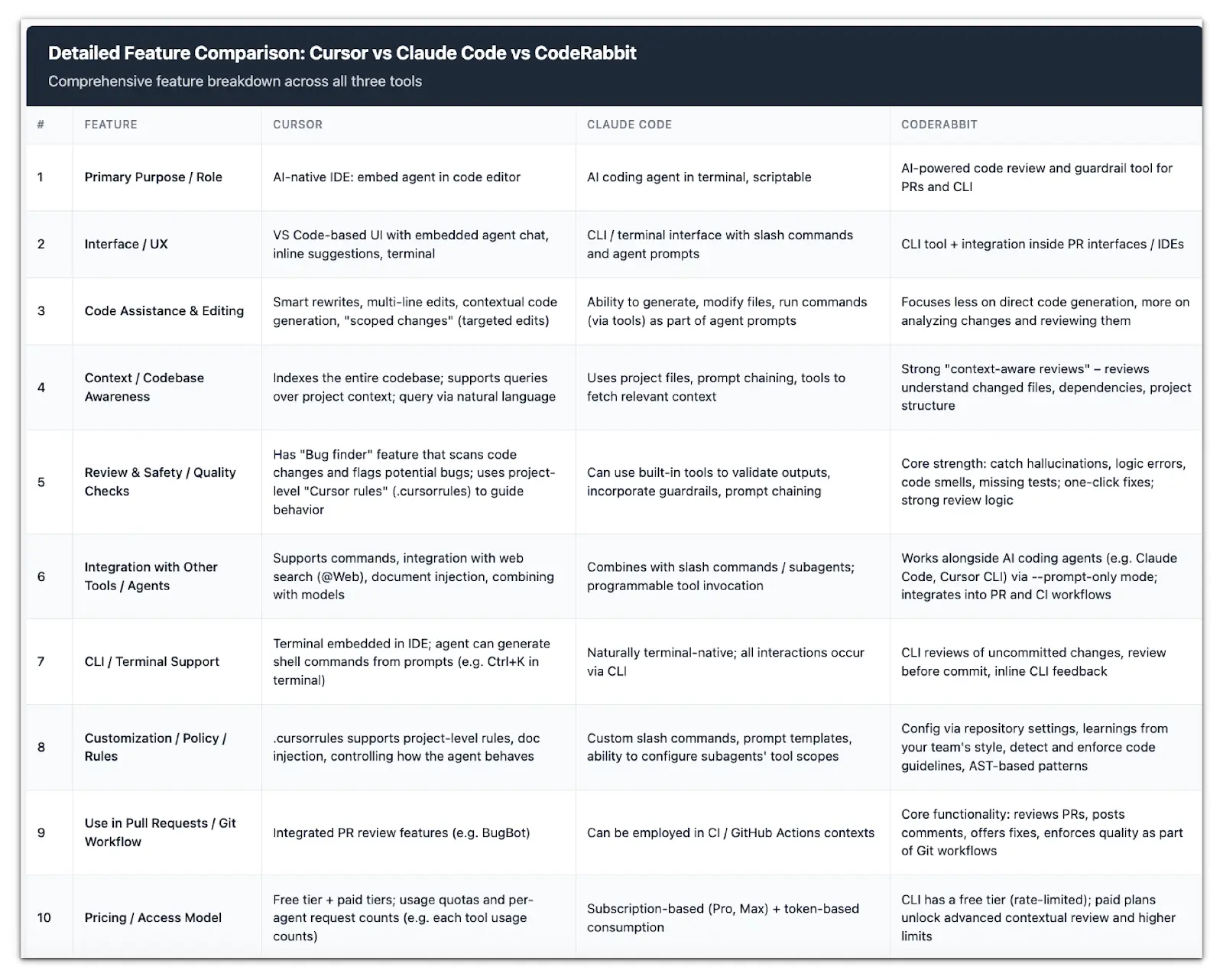
| Interface and operating model | Terminal-first assistant | Visual Studio Code-based AI editor |
| Context capacity | 200K tokens; Sonnet 4 supports up to 1 million | 128K normal context; about 200K in Max mode |
| Multi-file editing | Terminal-directed editing workflow; exact behavior is unverified | Editor-directed editing workflow; exact behavior is unverified |
| Command and test execution | Terminal model makes command-driven verification the natural operating pattern; execution details are unverified | Execution details are unverified |
| Diff-review control | Review process is unverified | Review process is unverified |
| Model selection | Model-selection behavior is unverified | Tabs can use independent contexts and different model selections |
| Concurrent work on one repository | Concurrent-work behavior is unverified | Independent agent workspaces exist; shared-repository coordination is unverified |
The matrix deliberately separates documented architecture from claims that require hands-on validation in a specific repository. A refactor evaluation should test command access, test invocation, patch boundaries, and the ability to recover after a failed edit. Those mechanics determine whether an agent is operating on the codebase or merely producing plausible changes.
Treat context as an admission requirement, not a winner by itself. According to DevTools Academy, Claude Code has a 200K-token context window, while Sonnet 4 supports up to 1 million tokens. Cursor provides 128K normal context and about 200K in Max mode.
Autocomplete quality is excluded because local completion does not establish that a contract remains consistent across consumers. Pricing is excluded because it does not alter the evidence produced by tests and diff review. General editor preference is excluded because familiar editing cannot substitute for repository-wide verification.
I would pick Claude Code for a large refactor driven by repository inventory, commands, and verification rather than active-file editing. Cursor is useful for editor-centered inspection, and its tabs can retain independent conversations with different model selections. That is useful coordination, but it is not proof that a shared repository change was executed and checked end to end.
Claude Code refactoring: command-driven breadth, real risk
Pick Claude Code for a migration that must discover relationships beyond the files already open; keep the final acceptance decision human. Claude Code is Anthropic’s official terminal tool operating as an autonomous coding agent.
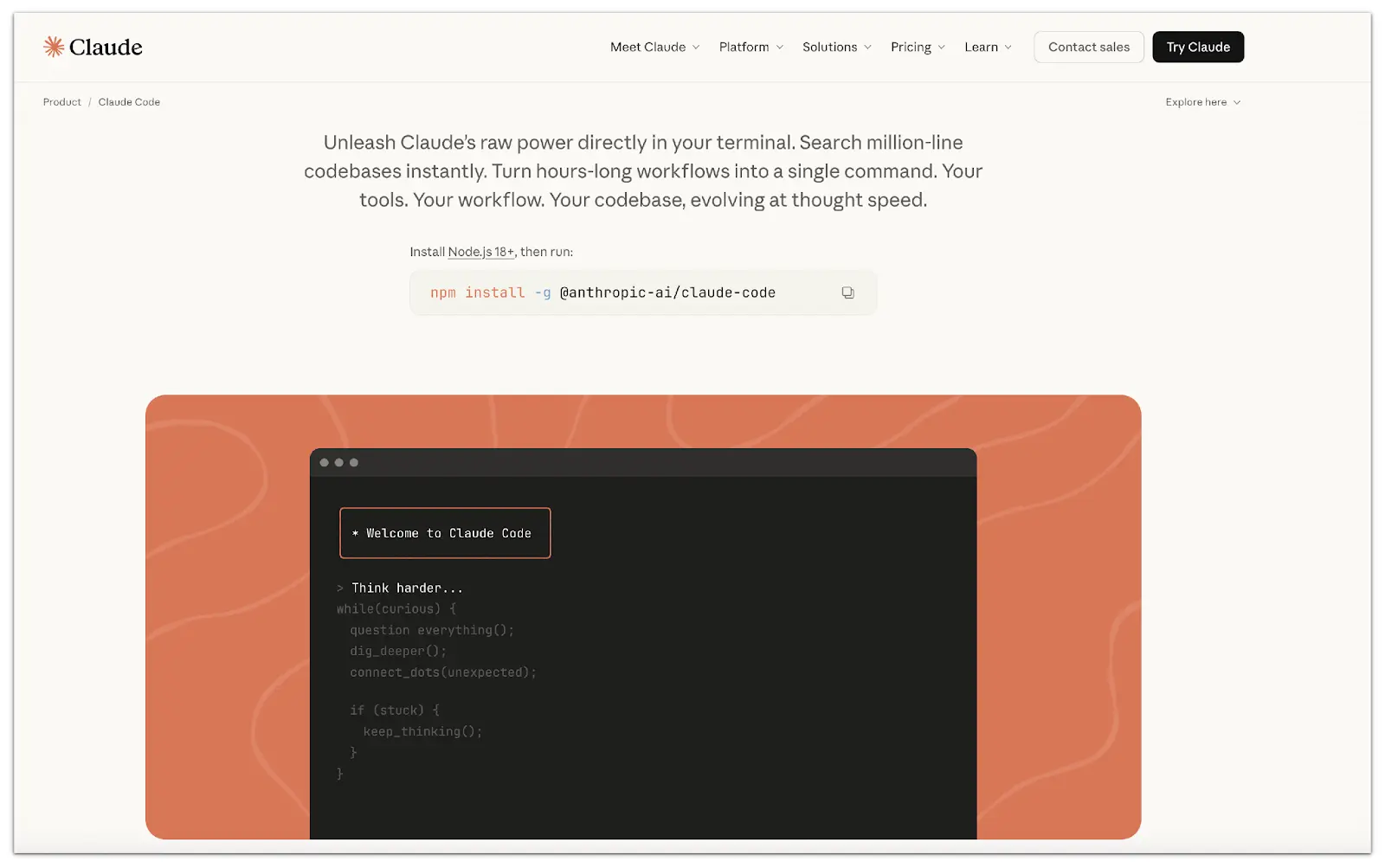
According to PE Collective, it can grep across thousands of files, inspect dependency graphs, and coordinate edits across dozens of files in one operation. Its shell access supports a test-and-repair loop: it can execute commands, run tests, check build output, and use results to fix issues. That makes it the better agent-led choice when the migration is bounded by explicit invariants rather than a request to update everything.
Autonomy is useful only when the test command is part of the task definition.
Where Claude Code wins and hurts
- Cross-repository discovery — Win: begin with broad search across packages and applications; Hurt: every search hit is a candidate, not proof of ownership.
- Dependency tracing — Win: inspect dependency graphs before changing imports; Hurt: graph edges do not define public API intent.
- Shell execution — Win: run migration scripts and validation commands in the same task; Hurt: a command can alter the working tree before a reviewer sees the diff.
- Test-and-repair loops — Win: feed a failing test back into the agent’s next edit; Hurt: passing tests can still preserve an incorrect contract.
- Terminal learning curve — Win: commands leave an auditable trail; Hurt: the CLI interface requires familiarity with project scripts and repository state.
- Blast-radius control — Win: scope and exclusions constrain edits; Hurt: a coordinated multi-file change still requires file-level review.
Start with a plan request, not an edit request. Claude Code’s plan-first workflow proposes a readable plan for approval before execution.
Plan only. Do not edit until approval.

Migrate the TypeScript package <old-package> to <new-package>.

Scope:
- packages/**
- apps/**

Public API invariants:
- Preserve exported symbols and their runtime behavior.
- Preserve existing import paths unless explicitly listed in the plan.
- Update internal call sites before removing compatibility code.

Excluded directories:
- generated/**
- vendor/**
- fixtures/**

Required validation:
npm test

Return a file list, dependency-trace summary, ordered edit plan,
risk points, and rollback approach.
The constraints turn broad discovery into a reviewable proposal instead of an unchecked repository rewrite. Claude Code can edit files and run commands in response to high-level prompts. Once approval is explicit, its task can include staging changes, writing a commit message, and creating a pull request.
Check in a refactor contract beside the migration so the agent and reviewer work from the same acceptance criteria.
affected_packages:
  - <old-package>
  - <new-package>

public_api_invariants:
  - exports remain available
  - import paths remain supported
  - runtime behavior remains unchanged

test_command: npm test
rollback_commit: <pre-refactor-commit>
After agent edits, use this human verification gate before staging or accepting the change set.
git diff --stat
npm test
git diff --check
Cursor refactoring: visible diffs and tighter steering
Composer is Cursor’s multi-file editing mode: describe a refactor through Cmd+I, and it applies edits across multiple files rather than confining the request to the open buffer. According to Blink Blog, Composer can propose a diff across every affected file, making the review surface explicit before acceptance.
That changes the control loop from Claude Code’s terminal-first execution to editor-first steering: inspect the patch, adjust the request, and accept or reject specific edits. [unverified] It suits engineers who want the local editor to remain the place where refactor decisions happen.
- Inline autocomplete handles small local edits while typing.
- Inline Cmd+K supports scoped rewrites in the current editing context.
- Independent tab contexts keep separate areas of the refactor from sharing an active conversation state. [unverified]
- Switch among Claude, GPT-4.1, and Gemini when a task calls for a different model.
**Why it matters:** For a UI-heavy refactor with ambiguous visual behavior, a proposed diff lets you inspect component structure, styling changes, and event wiring before those edits become the new local state. You still need to decide whether the patch preserves the interaction users expect.
Cursor’s documented normal context is 128K tokens, rising to about 200K in Max mode. [unverified] The engineer remains responsible for driving validation: the tool presents and edits code, but it does not establish that the repository still builds, tests pass, or the interface behaves correctly. [unverified]
- Start the broad change in Composer and inspect every affected diff.
- Use Cmd+K for a narrower rewrite when one patch needs correction.
- Run the repository’s existing validation commands after accepting the edits.
Cursor makes each edit easier to inspect; it does not remove the need to coordinate the refactor.
Pick Claude Code for repository-wide migrations
Verdict: Claude Code is the winner for a repository-wide migration with repeatable tests because its command-and-feedback loop can carry the migration through verification and repair in the same task.
Use a migration that replaces a shared authentication boundary, not a scattered collection of login edits. Its contract crosses:
Migration inventory
- Services: request middleware and callers move to the replacement contract.
- Packages: shared types and adapters change with the boundary.
- Tests: fixtures and assertions encode the replacement behavior.
- Deployment-facing configuration: environment mapping supplies the boundary’s settings.
The scope is bounded only if an explicit inventory maps every old boundary to a replacement and a proof command. The bottleneck is discovery plus verification, not local typing.
According to Blink Blog, Claude Code uses a plan-first workflow: it proposes a readable plan for approval before execution. Put the inventory and exact checks in that plan so approval means something testable.
| # | Approval gate | Required evidence |
| 1 | Approve the plan | A named migration inventory and execution plan. |
| 2 | Review scope | The changed-file count and diff match the inventory. |
| 3 | Verify the result | Run the repository’s defined test command and build command. |
Do not approve a plan that says “update authentication” without naming affected paths and the verification command. A changed-file count is a scope signal: a surprisingly small count suggests missed consumers, while a large count requires an explanation before execution.
For the migration, the winner is the tool that can close the loop with the test suite.
Cursor is the wrong popular editor-first choice when a change requires inventorying dependencies across dozens of files and executing verification commands as part of the same task. Cursor and Claude Code can work on the same codebase simultaneously, with Cursor in the IDE and Claude Code in a separate terminal window. When each tool is assigned a broad change, use separate branches so one agent’s edits do not alter the other’s reviewable scope.
Pick Cursor when the refactor needs line-level judgment
Cursor is the winner when the engineer is already reading the affected code and correctness rests on local judgment. [unverified] Choose it for:
- a component-library API cleanup
- a UI state-transition change
- a narrow debugging-led refactor
The deciding work is judging a prop name against intent and deciding whether a transient state belongs in the component. [unverified] A fully autonomous agent is the wrong popular choice when the unresolved question is a local product or interface judgment rather than repository-wide coordination. [unverified]
Review loop
Start with the symbol that owns the transition, not a generated task list. [unverified] Ask for an inline edit that states the invariant; then review the patch where its consequences remain visible, including call sites and the affected assertion. [unverified]
| Before review | Inline change | After review |
Select | “Rename this API, preserve the current transition rule, and update direct callers.” | Inspect the diff, then run test |
Treat the diff as an argument, not as output to approve in bulk. [unverified] Inline autocomplete belongs after the API rule is settled because accepting a completion is a local review action. [unverified] Cursor provides inline autocomplete, which developers most often cite as their primary reason for using it.
For a refactor whose correctness is visible in one editor pane, Cursor keeps the engineer in the driver’s seat.
According to DevTools Academy, Cursor tabs can have independent conversation contexts and different model selections. Put the design discussion in one context and the implementation pass in another, so the patch follows a settled decision rather than reopening the argument during editing. [unverified]
Do not delegate taste when the code review is the design review.
Use this mode when contract and changed branch fit in working memory, with the test failure close enough to inspect without handing off interpretation. [unverified] The engineer should reject a patch that passes its targeted test if the renamed API still reads visibly wrong in the reviewed component or the state boundary contradicts interaction in use. [unverified]
The final split: one tool for each refactor shape
Make the assignment from the refactor’s dominant failure mode, not from a preference for an editor or terminal. Use Claude Code when the work starts with an inventory that must become coordinated file changes and command output; use Cursor when the deciding work is an inspected local diff.
According to PE Collective, Cursor and Claude Code can work on the same codebase simultaneously. Treat that as separate roles, not shared authorship.
Choose the driver before choosing the model.
Key decision rules
- Dependency migration — Scope signal: manifests, lockfiles, imports, and compatibility call sites change together. Verification:
. Winner: Claude Code. - Monorepo-wide rename — Scope signal: a symbol, path, or package reference crosses repository areas and ownership boundaries. Verification:
. Winner: Claude Code. - UI component refactor — Scope signal: the change is contained in a component subtree, with props, state, and rendered structure requiring review. Verification:
. Winner: Cursor. - One-service bug fix — Scope signal: a failing behavior has a bounded service area and a focused regression test. Verification:
. Winner: Cursor.
For a two-tool workflow, create an inventory-and-migration branch for Claude Code: map affected areas, apply the migration, and record changed files and commands. Claude Code can edit files, run commands, and create commits from high-level prompts.
Create a separate targeted-review-and-polish branch for Cursor: inspect the migration diff, correct local design issues, and make narrowly scoped follow-up edits. Merge neither branch until each passes the same CI checks.
Do not let both tools edit the same files on the same branch.
Record every handoff before an agent starts so the next owner inherits constraints rather than guesses.
repository area: <path-or-package>
invariants: <behavior-to-preserve; forbidden-change>
owner: <person-or-team>
test command: <repository-ci-command>
rollback reference: <commit-or-change-reference>
Claude Code wins large refactors; Cursor wins tight edits
Pick Claude Code for large refactors when success depends on repository inventory, coordinated multi-file edits, and running the defined test and build commands.
Switch to Cursor when correctness depends on line-level product judgment in a bounded component, service, or failing test.
Key takeaways
- Start Claude Code with an approved plan that names affected paths, invariants, exclusions, validation commands, and rollback reference.
- Treat
git diff --stat, the repository test command, andgit diff --checkas acceptance gates before staging changes. - Use Claude Code for dependency migrations and monorepo-wide renames that cross packages, imports, manifests, and compatibility call sites.
- Use Cursor Composer to inspect a visible multi-file patch, then use Cmd+K for narrow corrections after the design rule is settled.
- Keep the tools on separate branches and do not let both edit the same files on the same branch.
Sources
- 1. [Cursor vs Claude Code: A Comprehensive Comparison | DevTools Academy]( https://www.devtoolsacademy.com/blog/cursor-vs-claudecode)