"A single round of harness editing added 11.5 points over the baseline." This October 9 release of Harness2 by Google marks a shift in AI development, focusing on editable harness layers instead of model retraining. The open-source software allows AI systems to self-improve by editing their operating layers, impacting developers, cloud customers, benchmark builders, safety teams, and regulators first.
Google Open Sources Harness2 for Self-Improving AI Agents
October 9: Google released Harness2 and posted the code at github.com/google-research/harness2, according to Startup Fortune. Startup Fortune reported the most consequential result in the launch coverage: “a single round of harness editing added 11.5 points over the baseline” on WorkBuddy-Bench.
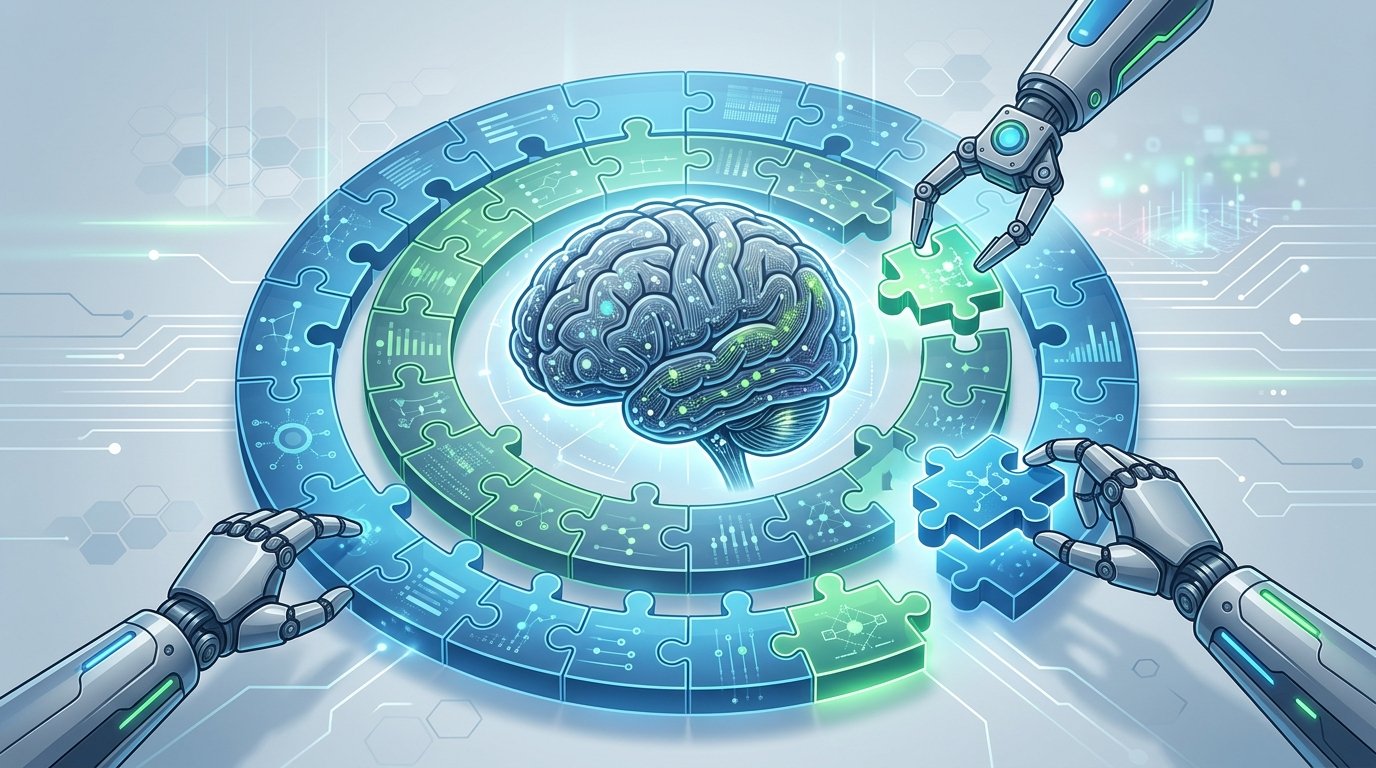
A harness is the operating layer around a model, including prompts, tools, memory, and control flow. In plain terms, this release lets an AI system rewrite that surrounding setup for a specific task, while leaving the model weights, the internal numeric parameters that training changes, untouched.
- October 9: Google released Harness2.
- October 9: The code was published at github.com/google-research/harness2.
- At launch: Google tied the release to task-specific harness runs rather than model retraining.
If you build agents, watch whether vendors now expose the harness as the editable layer first.
Why this release matters more than earlier Agents work
On October 9, Google put out open source software, meaning code with a license that lets others inspect and use it, for open-ended agent work rather than a narrow demo. This is news analysis, not a broad history of the field.
- Google is publishing the harness approach, not just describing it.
- The target is open-ended work by an agent, a software system that uses a model plus tools and rules to carry out tasks.
- The mechanism edits prompts, tools, memory, control flow, and sub-agents while model weights stay fixed, according to marktechpost.com
Earlier systems proved parts of this. Self-Harness mined execution traces to improve scaffolding. HarnessX treated the harness as a formal software artifact. RRSI was deployable as a research framework at launch.
Similar work did not land the same way because it stayed framed as research, while Google is shipping the harness idea into the open. Watch whether others copy the fixed-weights path first.
The key shift is self-editing without retraining
Harness2 changes the operating layer around the model. Self-improvement here means a system changing its own setup to perform better on later runs, while the model itself stays fixed; according to MarkTechPost, the model weights never change.
The model does not learn new weights. It rewrites the harness around fixed weights.
The mechanism is tighter than free-form prompt tinkering. Every edit must trace to a moment in a trajectory, which means the system ties each change to a specific step in an earlier run rather than inventing broad rules after the fact.
ArXiv reported that a named component usually beats prose.
That matters in deployment because teams can ship improvements by editing the surrounding setup instead of retraining a model, cutting both turnaround time and training spend. Watch whether later reports keep edits grounded in trajectories, because that is the control that makes self-editing auditable.
Who is exposed first and who is not
October 9 sets the exposure line: according to arXiv, Harness2 treats workspace facts as variable and labels them that way during runs.

- Exposed first: application developers changing prompts, memory, tools, and control flow, the same components Ben Dickson reported as the harness layer
- Exposed first: cloud customers and software buyers whose agents already run in production, because an execution trace is a recorded step-by-step log of what the system did during a run
- Exposed first: benchmark builders, safety teams, and regulators auditing failures across runs, since the self-harness design prevents cascading failures across the system
- Not directly affected: anyone expecting autonomous model retraining or a broad unsupervised capability jump, because model weights never change
For buyers, this is an operations and oversight story now. Watch vendor claims about self-improvement and ask whether they mean harness edits at launch or actual weight updates.
What this means if you build or buy AI tools
October 9 matters less than what shipped: a deployable research framework that lets teams test self-improving agent setups in practice, according to MarkTechPost. If you build with AI tools, treat this as an operations change, not a model miracle.
**Why it matters:** If your vendor sells “self-improving agents,” ask what is being changed and where results can be checked. Self-improvement holds up in verifiable work and breaks down outside it.
For buyers and managers, procurement now needs one extra filter:
- ask for domains with objective pass or fail outcomes
- ask whether the product is still a research framework at launch
- ask how it handles evidence, because the underlying work states evidence is data, not instructions
That is where exposure sits first: deployments with measurable outputs.
The numbers show where Harness2 can win
11.5 points is the cleanest result here. According to startupfortune.com, one round of harness editing lifted WorkBuddy-Bench, a benchmark, meaning a standard test used to compare system performance, by 11.5 points over baseline on office, web, and coding tasks on October 9, 2026.
| System | What it changes | Reported result |
| Harness2 on WorkBuddy-Bench | One round of harness editing | 11.5-point gain over baseline |
| RRSI | Self-improvement trials | All 6 held-out splits improved; 2.42M policy tokens, the text tokens consumed by the system's decision process during a trial, per trial |
| Self-Harness on MiniMax M2.5 | Tailored harness changes | Pass rate rose from 40.5% to 61.9% |
| HyperAgents | Transfer of self-improvement across domains | imp@50 = 0.630; hand-designed systems scored 0.0 |
For buyers, this says the gains are real in bounded tests, while the cost can be heavy.
The practical limit is simple: these numbers come from specific tasks and setups, so they show where self-editing works, not a blanket jump in general ability.
The next dates will decide whether this spreads
October 9 set the clock. The code is public at github.com/google-research/harness2.
Harness2 spreads if teams can plug that trend into a verifiable task, a task with an outcome that can be checked objectively, because self-improvement holds there and breaks outside it.
- October 9: watch forks, issues, and outside pull requests on the public repository
- The next day: watch for replications on objectively checkable tasks, not demos
- That week: watch whether benchmark builders and safety teams adopt it as shared infrastructure
Verdict: yes, this release will spread beyond a research curiosity if replications land on verifiable tasks, and the evidence says that is the only lane that counts.
Harness2 matters now because it lowers the barrier
11.5 points over baseline in one edit round is enough to settle where Harness2 lands. This is an operations advance for agent teams, and it moves the center of gravity from retraining to editable, auditable harness layers with fixed weights.
October 9 matters because the code is public.
Key takeaways
- Treat “self-improving agent” as a harness claim unless the vendor shows weight updates. Prompts, tools, memory, control flow, and sub-agents are the parts changing here.
- Ask for results on verifiable tasks with objective pass or fail outcomes. The reported gains and the article’s own limits both sit in that lane.
- Require trajectory-grounded edits in any serious deployment. If changes are not tied to specific execution steps, you lose the audit trail that makes this approach usable.
- Watch adoption in forks, issues, pull requests, benchmarks, and safety workflows before you credit broad momentum. Public code and outside replication are the threshold now.
- Budget this like systems work, not model training. The upside is faster iteration without retraining; the limit is that bounded-task gains do not equal a general capability jump.
Sources
- 1. [Google open sources Harness2, letting AI agents rewrite their own playbook - Startup Fortune]( https://startupfortune.com/google-open-sources-harness2-letting-ai-agents-rewrite-their-own-playbook/)